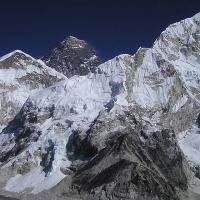
In contrast to other treks of Everest region, our Everest High Pass Trek is a bit more adventurous and standout from the rest with impeccable natural beauty and cultural exquisiteness. Everest region in itself provides a tantalizing glimpse of Nepal’s arcane terrains and esoteric pathways that always make traveling in Nepal a joyous occasion for any who dare to come here.
Breathtaking views of mountain range, thrilling experiences and the overall beauty of the entire Everest region is bound to be etched in your memory once you try our Everest High Pass Trek. Yes, it’s a challenging trek that will require you to be physically and mentally prepared. But if you are in a good shape and can cope with the minus zero temperatures and harsh landscapes of the Himalayas, then completing this trek will not be as difficult as you previously might think it was. However, you do need to be vigilant and cautious about your surroundings while crossing the high Himalayan passes that are the main highlight of this trek.
Nepal is a beautiful yet geographically astonishing place where several things can be found within a small land area including some of the world’s highest mountain and some of the world’s challenging high passes that can be above 5,000 meters in elevation. Among them- Khongma La, Chola and Renjo La are the three passes that are going to explored and crossed by us during our 20-day adventure. We begin with a flight to Lukla from Kathmandu and slowly make our way up to Namche bazaar which a perfect place to stay for acclimatization. And just so you know, trekking at high altitude is very risky as it may cause you to become ill with Altitude Sickness. Hence, acclimatization is a vital preventive measure for all the trekkers to keep in mind while trekking.
From there we go further to Chhukung and cross our first pass- Khongma La to reach Lobuche village. Then, we make a slight turn to Everest Base Camp and Kalapatthar before heading towards Chola Pass and Renjo La Pass. Later, after successfully crossing all the 3 passes, we shall head back down to Namche Bazaar and Lukla to end our trek with a 30-minute flight back to the bustling heart of Nepal- the Kathmandu city.
Want to go on our Everest High Pass Trek? Then, contact us right away and book this trip with us!
| Day | Highlight | Overnight |
|---|---|---|
| Day 1 | Kathmandu (1340m/4396ft) | Kathmandu |
| Day 2 | Flight to Lukla (2,840 m/9,184 ft) & Trek to Phakding (2,610 m/8,700 ft) | Phakding |
| Day 3 | Namche Bazaar (3,440 m/11,283ft) | Namche Bazaar |
| Day 4 | Namche Bazaar (3,440 m/11,283ft) | Acclimatization Day | Namche Bazaar |
| Day 5 | Tengboche (3860m/12660ft) | Tengboche |
| Day 6 | Dingboche (4410m/14464ft) | Dingboche |
| Day 7 | Dingboche (4410m/14464ft) | Acclimatization Day | Dingboche |
| Day 8 | Chhukung (4730m/15514ft) | Chhukung |
| Day 9 | Lobuche (4910m/16105ft) | Kongma La Pass (5535m/18160ft) | Kongma La Pass |
| Day 10 | Gorakshep (5181m/16994ft) | Everest Base Camp (5364m/17594ft) | Gorakshep |
| Day 11 | Dzongla (4830 m /15939ft) | Kalapatthar (5545m/18188ft) | Kalapatthar |
| Day 12 | Thangnak (4750 m/15,580ft) | Cho La (5420 m/17,780 ft) | Cho La |
| Day 13 | Gokyo (4800 m/15,744ft) | Gokyo |
| Day 14 | Rest day | Gokyo Ri (5360m/17586ft) | Gokyo Ri |
| Day 15 | Lungden (4370m/14334 ft) | Renjo La (5360m/17580 ft) | Renjo La |
| Day 16 | Namche Bazaar (3,440 m/11,283ft) | Namche Bazaar |
| Day 17 | Lukla (2,840 m/9,184 ft) | Lukla |
| Day 18 | Kathmandu (1340m/4396ft) | Kathmandu |
| Day 19 | Leisure day | Kathmandu Sightseeing | Kathmandu |
| Day 20 | Departure |
The city of Kathmandu is full of excellent muses: the bustling roads, the jostling houses, and the amazing street vendors- offering the taste of historical Nepal (Newari cuisines). Once you land at the airport in Kathmandu, one of our representatives will meet you there. He/she will greet you in a traditional Nepalese style with a warm smile, a fresh garland, and a welcoming Namaste. Then, they will accompany you to your hotel.
Freshen up in your room, and take as much rest as you like. In the evening, you will be introduced to your guide, who will point out all the briefings about the Everest High Pass Expedition.
Early in the morning, we will head on towards the airport to catch a flight to Lukla. It is a short (25 - 45 mins), but an adventurous flight over the undulating hills and ridges, extended to the seemingly infinite horizon. I mentioned adventurous because there is barely any flat section visible from the airplane, and flying across such hills gives you no options for escape if anything goes wrong.
Soon after we land in the Lukla airport, we will begin our first day of the trek by walking to Phakding via the beaten trail fenced by colorful farm fields. To see, there are few surprises which, in most cases, tempers the anticipation of what is about to come next.
The beautiful Mani walls and prayer inscribed wheels of Buddhist make up an important part of the beauty that the Everest region has to offer. By the time we ascend few kilometers ahead of Choplung, a hamlet of Sherpas, there comes a point from where the mighty Kusum Kanguru peak appears visible. Then, shortly after that, we will reach Phakding- one of the busiest villages in the Everest region.
The trail from Phakding meanders around the west side of the Dudh Koshi river and, finally, drops to a small village named Toctoc. From this point, a few peaks show up on to the sky. But the real beauty could only be felt when we encounter the raging waterfall- falling stepwise to finally land down. From there, another waterfall awaits at Bengkar, which is also famous for offering good apple pies. The trail then descends to cross a wooden bridge that shows the trail leading to Monjo.
Monjo is the entrance point to enter into the woods of Sagarmatha National Park. Through Jorsalle, we will ascend through the dense woods of the National Park. It is a silent walk. From somewhere in the middle of the trek, we could capture a glimpse of Mt. Everest, which is something that invokes the excitement of being blessed by more good views. Upon arriving at Namche, we could see the stone chortens and prayer flags lining across the whole Sherpa Village.
Namche is an ideal spot for acclimatization as this town is blessed with all the ingredients that are necessary for lowlanders to properly adjust in the high-altitude pressure and temperature. This place has remained a commercial center for over a century, which has helped it in building a few modern-day infrastructures such as electricity and internet in the town.
During the day, we will stroll around the beautiful places at Namche and then, go on a short hike around the Namche. It may be either to Khumjung or to Thame or within Namche itself. Wherever you go, you will feel blessed the beauty of Everest region.
From Namche, a bundle of routes dissociates to Tengboche. Among them, we will choose the rightmost trail along the Tenzing Memorial Stupa. It is because the views from this point are startling, and the side hill views are intoxicating. We will walk along the winding trails and pass through several Mani walls and Chortens on the way.
Just before crossing a suspension bridge at Phunke Tenga, you may turn your eyes right, into the river, where the 7 prayer wheels are spinning by the force of the water. The colorful prayer flags, wrapped around the bottom of these wheels, resonate a vibrant tone in the atmosphere. Continue the slog until arriving at Tengboche. There, the monastery of Tengboche is unmissable. The beautiful décor, in and out of this monastery, makes it one of the must-visit sites at Tengboche.
[Note: Tengboche monastery is the largest monastery in the Everest region of Nepal.]
This day is reckoned, sometimes, as the best day of trekking in the Everest Region. The views of Makalu, Ama Dablam, Lhotse, etc. appear so intoxicating that not even a pedestrian is left unsurprised. From the two chortens, a few kilometers behind Dingboche, the view of Taboche Peak appears truly spiritual.
Having admired this day as the most beautiful one, there are places where you have to struggle a lot to push yourselves a little further. There are several steep points, as well, to cross, but each rigorous ascend rewards you with something extraordinary and wonderful. Dingboche is a truly appealing spot, which overlooks upon a few mountain ranges.
The acclimatization at Dingboche is necessary in order to develop more endurance capacity at higher elevations. For that purpose, there are so many exciting places to visit at Dingboche: one of which is the chain of Mani walls. It is said that this wall was built unintentionally. When the farmers plowed their field for cultivation, the stones that came on the way were placed on the side of the field. These stones, later on, got stacked one over the other to form a long wall.
After visiting the site of Mani wall, we will proceed towards the Nangkar Tshang Hill (5616m/18425ft). There is a monastery named Nangkar Tshang on the left of the trail to the main hill. The walk is pleasant as you go through the alpine woods of the Himalayas. It feels so good to be there. Once you rise on to the hilltop, the views of Makalu, Chhopulu, Lhotse, Lhotse, and island peak appears commendable as if they are lined up with perfect spacing. Later, we will return to Dingboche for the overnight stay.
The views of Chhukung Ri, Nuptse, Lhotse, and Taboche peak are truly commendable from Chhukung. We will cross the icy rivers and boulder fields on the way before making an appearance at Chhukung. The ridge of Chukkung overlooks a gorgeous panorama of tall mountains distributed randomly in the vast snowscape.
After Dingboche, the trail ascends towards the Chhukung via the jagged path and icy rivers. The ascent can be a little demanding as the altitude plays a part here. Every step feels like running in a marathon. Plus, because of snow, you might require crampons to assist in smooth ascend to Chhukung Ri (5546m/18190ft). However, the shoes with perfect grip may be enough to conquer the elevation of Chhukung Ri. In the end, you will be rewarded with something out of the world views of the mountains. It is truly amazing.
The path to Lobuche ascends through the Kongma La (5535m/18160ft), the highest pass in the Everest region, before descending to Lobuche. From the pass, the striking views of the mountains could be seen. Notice, I mentioned mountains because when you rise to the top of the pass, the feeling of conquering such a massive height will leave you literally unaware of the shape and size of the mountains; so, it becomes quite difficult to distinguish them.
Firstly, the path runs towards the westerly direction and then, towards the north. There are so many turnings to take before rising to Kongma La pass. While ascending, don’t hurry to climb as the altitude might let you down. To acclimatize with the soaring altitude, you will walk calmly and breath properly. When you arrive at Lobuche, the view of Nuptse is the only that keeps you alive.
Today, we will walk along the ridge, past several chortens and prayer wheels, to finally make an appearance at the base camp of the mighty Everest. A vast snowscape surrounds us in the base camp, and it feels as if we are a tiny dot painted in a large canvas of white. The view of the surrounding mountains, from the base camp, is indeed a soul-piercing one.
From Lobuche, we will leave our room at least 2 hours before sunrise. It is because the wind may get fierce in the morning, resisting you to proceed ahead along the ridge. The trail is slippery and difficult to pass through, so be aware of the position of your legs. By the time we reach Gorakshep, we will continue towards the base camp. After spending a few moments on top of the world, we will return to Gorakshep, which will be our stop for the night.
Kalapatthar is the major highlight of the day. The views, seen from the top of Kalapatthar, is so appealing that your eyes barely get the chance to blink. The gorgeous rocky Southwest face of Everest dominates the eastern skyline, and the randomly alternating series of countless anonymous ranges form an exciting outlook of the Himalayas. When the first beam of sunlight explodes in the Everest, the whitish snow automatically turns golden. This stupendous view is what makes Kalapatthar so alluring.
From Gorakshep, we will climb to the top of Kalapatthar before sunrise, and descend back to Gorakshep for the lunch. After that, we will walk along the same ridge until Lobuche. But then, our feet will proceed to the right towards the Dzongla via Dughla. The is no sharp altitude gain in this day, so it doesn’t feel so taxing to make it up to the Dzongla.
Cho La pass is a rewarding viewpoint, offering the stupendous views of Ama Dablam and Cholatse. Few meters ahead, an overhanging icy cliff peeks onto the turquoise-looking pristine glaciers. These views make this day an exciting one, but the heaps of snow, covering the trail, will demand you to push yourself with a bit more effort.
From Dzongla, the way to Cho La is winding and full of snow. Plus, the continuous ascend to the pass will slacken your energy. But, by the time you get on to the top of the pass, the stunning views of the mountains will compensate all the hard times you have been through to reach there. From that pass, the trail descends to Thangnak, which will be our next stopover.
The Ngozumba glacier, longest glacier of Nepal, is something that you have never seen before. When we arrive at Gokyo and have time then, we may as well explore the lake systems of Gokyo.
From Thangnak, the trail drops to Dragnag via an easy trail. Then, the path ascends to Gokyo across the Ngozumba glacier, which is one of the beautiful glaciers in the world. This glacier can be witnessed at its close proximity when we are proceeding to Gokyo. It is a joyful day.
We will stroll around the village of Gokyo and enter into its lake system. The icy water in the lake appears turquoise in color because of the tiny glacial matters decomposed underneath the surface of the lake. This lake is also considered a spiritually sublime center by the pilgrims of Hindus and Buddhists.
From Gokyo, the main ridge is few kilometers up, along the northern direction. When we rise to the top of the ridge, you will notice something strange. The views appear relatively unchanged from what seen from the Kalapatthar, except that the positions of the mountains are different. So, you may expect to witness something glamorous on this day. Later, we will return to Gokyo valley.
The Renjo La pass, after Kongma La pass, is the only left pass to cross in this trek. Like other passes, Renjo La also offers some good views of the Himalayas. The Everest and Makalu dominate the eastern skyline, and other anonymous ranges provide the supporting views. The views begin to fade away as you proceed down the pass.
From Gokyo, the ascend to Renjo La Pass can be taxing. You will have to drag your body as the altitude plays a part here. The path to the Lungden from the Renjo La pass is rewarding with only a handful of ascents.
As we leave Lungden, the raging sound of the Bhotekoshi river starts resonating in the air. The tropical forest, with densely spread trees, surprises your eyes with greenery after a long day of trekking in the snow. While the views of Himalayas grow feeble while descending to Namche, the new aura of warmth provides you an inner relief.
From Lungden, the way is far away to Namche. We will arrive at a beautiful hamlet of Thame, before proceeding to Namche. There is a waterfall on the western flank of the Thame that cascades from the top of the cliff to the plain of Thame. Within a few minutes, we will make an appearance at the Namche Bazaar.
The route to Lukla from Namche is the same one in which we have been through earlier. But, unlike before, the trail is descending.
From Lukla, we will catch a return flight to Kathmandu. Despite experiencing the flight above the undulating ridges of the Himalayas before, this flight is equally thrilling. On arriving at the Kathmandu, our vehicle would be there to pick us up. We will be transferred to the hotel.
Finally, it is time to alter the taste. On this day, we will travel across the four brilliant world heritage sites (UNESCO listed) in Kathmandu (Patan Durbar Square, Pashupatinath Temple, Boudhanath Stupa and Swayambhunath Temple), and stroll around the stalls of souvenirs and handicrafts near the sites. You may as well purchase them if you like to.
Patan is a city of arts. There are temples and centuries-old palaces, each of them adorned with paintings of godly images. The delicate carvings on the windows and pillars of the Patan Durbar Square dictate a sort of mythical construction of events (a story indeed). Similarly, Pashupatinath temple is also bedecked with wood carvings and sculptures. But, the real beauty of Pashupatinath is its spiritual existence in the hearts of the Nepalese.
Boudhanath and Swayambhunath, on the other hand, are the Buddhist stupas. Their spherical architecture makes them stand out among the rest of the structures. The crowning pyramid above the mandala of both of these mansions is plated in gold. It is really an amazing experience to explore these regions.
Finally, this day is the departure day. Before that, we will have a farewell night, on the 19th day, with all the expedition members of Holy Mountain Treks. We will share our experiences and cultures together, and create some memories.
Today, one of our representatives will drop you at the airport and wish you a safe flight ahead.

This is the short version of the Annapur
The daunting experience of landing on th
Trekking can be a very addictive adventu
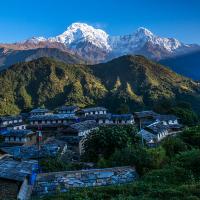
The scenic views of the Himalayas have a
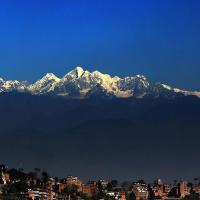
Nepal, famously known as the land of the
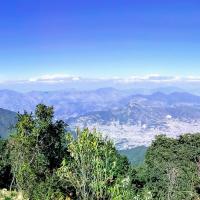
The journey starts from the capital stra