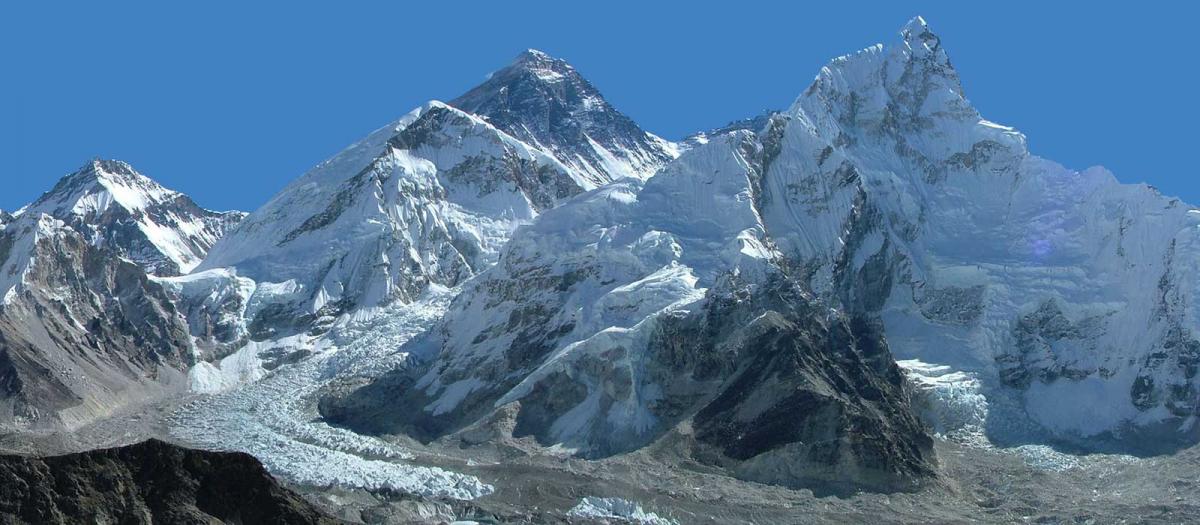
“Because it is there.” is the best answer when somebody asks you why Everest? Anybody wants to be on top of the world, at least for a few minutes once in a lifetime and summiting the Everest may not sound like what you can do. This is when the Everest base camp trek comes in handy. It promises to take you as close to the highest point of the world as possible. This trek is the best option to skip the toil and trouble endured by the Legendary Hillary and Norgay, and still enjoy the vivacity of the Himalayas.
Everest Base camp trek takes you along the classic yak caravan routes through traditional Sherpa villages and monasteries (Gompas). You will have an opportunity to witness their iconic cultures accompanied by colorful festivals in different parts of Khumbu (Everest region). Flashy Chortens and Prayer flags are scattered throughout the alleys, propelling a Buddhist vibe along the trail. You will come across some of the most beautiful sceneries, found nowhere else in the world. To sum up, this trek meaning to your life.
This question can be interpreted as ‘Why Everest?’ and the answer may not be always ‘because it is there.’ With all the inconvenience you go through in this trek, it is quite reasonable to ask whether this trek is worth undertaking.
Hundreds of our trekkers have mentioned that this trek has been the turning-point of their life. They say that they have discovered a new perspective to see the world and beyond, after this trek. But what are the key things that you can learn from this trek?
On the way, there are lots of difficult pass throughs – some of which seems impossible to invade – before reaching the Everest Base Camp (EBC). Beyond all these barriers hides some of the most exotic views that you never thought had existed before. After this trek, you will always try to escape from your comfort zone.
It is not that you get into the base camp at the blink of an eye. You need to acclimatize and go slowly to successfully rise up to the base camp. So, perseverance is the best lesson you can learn from this trek.
No matter how good you prepare, you are sure to miss something in your home. Only the experienced trekkers know how to rightly prepare for the expedition. After this trek, you will understand the secret behind right preparation.
It is not the ups and downs that trouble the most during the trek. But the altitude is the real distress. As soon as you land in the Lukla Airport, you are at an altitude of 2840 m above sea level, which is pretty high. So, it requires a lot of energy as well as endurance capacity to attempt this trek.
I can’t say that the people of this to this age group can only venture this trek because the 70s people have already proved me wrong. Therefore, to attempt this trek, you must be fit (regardless of your age) and should have the ability to sustain the high-altitude pressure, low oxygen atmosphere and icy wind, at the same time.
No matter how fit you think you are, follow the acclimatization techniques seriously, or else Everest will kick you off.
Here, I have pointed some of the highlights from Everest Base Camp (EBC) trek:
Expect a lot of hard-work and a grand victory at the end of the day.
Firstly, right information is absolutely important. Secondly, right preparation is unavoidable, and lastly, right execution is key to perfect expedition.
Now, what do you mean by Right Information? It is all about feeding yourself as much information about the Everest as possible, so that the culture, people and mountains don’t spoil your trip.
Here are few things that you should know to make your trip a special one:
Sherpas are friendly by nature, and most of their cultures are associated with the mountains. Buddhism is what most of them follow and they believe in loving all the creatures: no killing or violence.
Most part of the trail follow switchbacks. Don’t expect an easy and flat section.
Hike high, sleep low is the best way to acclimatize. Namche Bazaar and Dingboche are perfect for acclimatization.
To reduce the altitude-effects, drink enough fluid before trekking. Sleep well and ensure proper acclimatization.
Respect the mountains and delve into the tranquility and beauty of the Himalayas. This helps you to divert your mind from the exhaustion.
Check out our blogs on Sherpas and Everest.
The logic behind right information is right preparation, because only with the right information can you prepare well. Here are few things you can’t ignore while preparing for Everest Base Camp Trek.
Right execution is all about adhering to the plan of your trip. It is very important.
| Day | Highlight | Overnight |
|---|---|---|
| Day 1 | Arrival in Kathmandu (1,338 m/4,390 ft) | Kathmandu |
| Day 2 | Sightseeing around UNESCO listed World Heritage Sites in Kathmandu | Kathmandu |
| Day 3 | Fly Kathmandu to Lukla (2,840 m/9,317 ft) and Trek to Phakding (2,610 m/8,562 ft) | Phakding |
| Day 4 | Trek from Phakding to Namche Bazaar (3,440 m/11,283 ft) | Namche Bazaar |
| Day 5 | Acclimatization Day at Namche Bazaar | Namche Bazaar |
| Day 6 | Trek from Namche Bazaar to Tengboche (3860 m/12660 ft) | Tengboche |
| Day 7 | Trek from Tengboche to Dingboche (4410 m/14464 ft) | Tengboche |
| Day 8 | Acclimatization day at Dingboche and side trip to Nangkar Tshang (5,616 m/18,425ft) | Dingboche |
| Day 9 | Trek from Dingboche to Lobuche (4,910 m/16,105 ft) | Lobuche |
| Day 10 | Trek from Lobuche to Gorakshep (5,140 m/16,864 ft) to EBC (5,364 m/17,594 ft) and return Gorakshep | Gorakshep |
| Day 11 | Kalapatthar (5550 m) and Back to Dingboche | Dingboche |
| Day 12 | Dingboche to Tengboche | Tengboche |
| Day 13 | Tengboche to Namche Bazaar | Namche Bazaar |
| Day 14 | Namche Bazaar to Lukla | Lukla |
| Day 15 | Fly back to Kathmandu | Kathmandu |
| Day 16 | Final departure |
As your flight lands in the airport of Kathmandu, one of our representatives will welcome you at the exit point and accompany you towards your hotel. For the day, you may take rest and prepare for the forthcoming expedition.
However, if you feel like strolling around, then the market hub of Thamel is the best place to visit. You may as well go to see Basantapur Durbar Square (ancient palace of Kathmandu Kingdom), which is just 20 mins away from your hotel.
Kathmandu is a historic city, adorned with brilliant Durbar mansions and throngs of temples. Each of these edifices has a story behind its construction: while some may sound credible, others are full of myths. But the real beauty lies in the artifacts and architectures of these mansions.
Among others, Patan Durbar Square is the legendary composition. The intricately carved window designs and delicate décor of interior and exterior make this historical palace a charm of Kathmandu. On the other hand, the most revered shrine of Pashupati is equally commendable-both in terms of art and faith. Thousands of devotees dwelling around the premises of the temple shows the real importance of Pashupatinath in the hearts of Nepalese (Hindu followers).
Similarly, Boudhanath, with its massive mandala, stands proud dominating the eastern skyline. And, the excellent views from the viewpoint of Swayambhunath (overlooking the Kathmandu valley) enhances the beauty of the city.
On this day, you will go to these sites (listed in UNESCO World Heritage Sites). If you wish to visit any other sites, you may ask for customizing your itinerary.
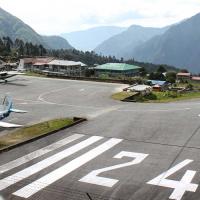
A flight from Kathmandu to Lukla is in itself an adventure, because you will be landing on one of the world’s dangerous airports-Lukla Airport. The runway is short, and the milieu is full of mountains. So, if anything goes wrong, there is no chance of escape. For that reason, only the highly experienced pilots are allowed to operate the flight to Lukla.
As soon as your flight reaches Lukla, you will get your backpack ready, hand it to the porter and kick-off on an expedition to Everest Base Camp (EBC). For that particular day, your target is to reach Phakding. But, as you leave Lukla, don’t expect a silent trail, full of sceneries, as the way until Namche are often crowded by the trekkers (especially in the peak seasons) and the sceneries are blocked by the dense forests.
At the end of the day, you will arrive in Phakding, and your guide will arrange accommodation for you. Have a good night sleep!
Flight Duration: 25 – 35 minutes
Trek Duration:3 – 4 hours
Elevation loss: 230 m
The trek begins early in the morning as there is a long way to go today.
Soon after leaving Phakding, you will meander on the west side of the Dudh Koshi (river) through a beautiful pine woodland and numerous settlements. A pleasant waterfall at Toktok may be your first encounter with the beauty of Himalayas. Then, after crossing a series of ups and downs arrives another spectacular waterfall at Bengkar, which is also the best stopover to taste good apple pies (Price fluctuates around Rs. 400).
As you leave Bengkar, the trail winds around the terraced farmland and climbs towards Monjo (2835 m). Many trekkers stop at Monjo for the launch-so do you. Within a couple of distance arrives a checkpost for the Sagarmatha National Park; spending a few minutes around the entrance to read about the park is worthwhile.
Then, the trail descends quite steeply, and crossing a suspension bridge over Dudhkoshi, leads you to Jorsalle. After a while, the trail again crosses another bridge above the Dudhkoshi that takes you to the eastern bank of the river. Then onwards, the path is snaky and accompanies frequent switchbacks. From somewhere in the middle of the Sagarmatha National park, you can get the brilliant views of Mt. Everest (first Everest view), which, indeed, becomes the source of encouragement to proceed further.
Before stepping into Namche, there is another checkpost named Rural Municipality Ticket (RMT). After checking-in, you will arrive at a large Kani Gate, whose glamour is endorsed by several gompas as well as the beautiful paintings of late Manjushri, and Vajrapani. For the night, you will stay in Namche.
Trek Duration: 6 – 8 hours
Elevation gain: 830 m.
For a great expedition at such a high altitude, acclimatization is unavoidable, which, otherwise, if neglected may pose a severe threat to your health. And, by all means, no place is better than Namche for acclimatization.
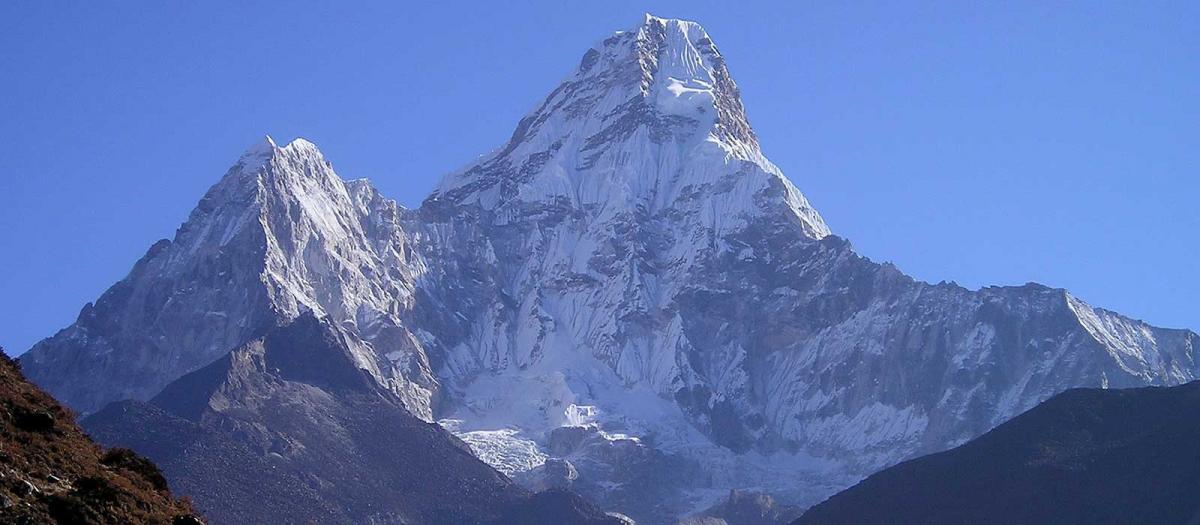
‘Hike high, sleep low’ is a simple, yet effective, technique to better adjust in a high elevation. So, you may go anywhere higher and come back to Namche late during the day. Khumjung and Khunde are the best-known hiking destinations from Namche, which provides ample opportunity for you to gaze upon some of the peculiar monasteries and all-loving people. As an alternative, you may as well hike to Thame, which is a perfect spot to witness the splendors of Mt. Ama Dablam, Everest and other ranges.
While nearby destinations are beautiful, Namche is no less pleasant to stroll around. Being the trading hub of Tibetans and Sherpas for centuries, Namche can be an ideal market place to shop for artistic souvenirs and handicrafts. Almost every modern-day service, such as Wifi, satellite tv, cyber, etc. are available here at Namche. Also, the museums with its excellent displays of historical monuments and its background information enhance the real glamour of the Namche.
Sleep well for the next day arduous walk.
Trek Duration: 5 – 6 hours
Early in the morning, with your backpacks ready, you will set off from Namche and proceed towards the Tengboche (next destination).
Within a short interval, the Himalayas quietly reveals some of its mind-boggling sceneries, hinting on what is about to come next. After crossing a Memorial Stupa of Tenzing Norgay Sherpa, few of the mountains – Ama Dablam, Lhotse Shar, Taboche, Kangtega & Thamserku – appear shining with the rays of sunlight. Further ahead, you will come across two junctions – the first one leads to Khumjung, while the other one to Phortse Thanga. But, ignoring these both alternatives, you go through the right track that leads you towards Phunke Thanga.
On the way, you will see many water-driven prayer-wheels on your right. As you move along, the sceneries get more attractive until Tengboche. Visiting the Tengboche monastery is worthwhile if you want to spend a few moments in the peaceful ambiance. Also, this monastery is the largest one among all others in the Khumbu Region.
Take rest for the next day trip.
Trek Duration: 7 – 8 hours
Elevation gain: 420 m
A path to Dingboche is one of the most scenic routes in the Khumbu region of Nepal. The Himalayas peek at you throughout the trail.
As you leave Tengboche, the trail advances through a series of switchbacks and climbs steeply at some points. To reach Debuche, you need to climb up the stone stairs. A suspension bridge hanging across the river paves your way to a junction between Pangboche, Tabuche, and Dingboche. Then, you will go along the latter trail that contours several times after Somare. Meanwhile, you will cross a suspension bridge at the confluence of Imja Khola and head on towards Dingboche parallel to the Imja river.
Within an hour from the suspension bridge, you will arrive at Dingboche for the overnight stay.
Trek Duration: 6 – 7 hours
Elevation gain: 550 m
After climbing so high (above 4200 m), acclimatization becomes a necessary ingredient to spice your adventure, and for that purpose, Dingboche is a perfect spot. You may undertake numerous hikes from Dingboche. One goes towards Chhukung Ri, while other to Nangkar Tshang hill; both are incredibly awesome.
For a short-day hike, Nangkar Tshang hill would be the best option as it is less demanding (physically), alongside offering marvelous sceneries. On the way to it, you will encounter an old but beautiful gompa named Nangkar Tshang. It is quite confusing, whether the name of the hill comes from the gompa or vice-versa. Anyway, what all matters is the magnificence that the mountain has to offer. Within about 2-3 hours, you will reach the hilltop of Nangkar Tshang, overlooking the realms of Makalu, Chhopulu, Lhotse, Lhotse Shar, and Island Peak. The view is as if you are a bird flying over these pinnacles: A Virtual Paradise.
Later in the day, you will return to Dingboche and prepare for the next day trip.
Trek Duration: 2- 3 hours
Dingboche to Lobuche is a short trip, that takes you one step closer to the Mt. Everest. The trail is less demanding as a sort of preparation for the upcoming strenuous trek to EBC.
As you leave Dingboche, the trail progresses along the ridge in Northern direction until Dughla. Trekkers, who have enough time, take a side trip to Tshola Lake, which is underneath the shadow of a great Cholatse peak. Rest of the trekkers progress further 2-3 hours to Lobuche.
The trail from Dughla is pretty steep. As you arrive at Tokla Pass (4830 m), you will notice several memorials of the people, killed in the Khumbu. Later on, as you reach Lobuche, it is advisable to lay down and take rest, instead of rambling around.
Nothing is so good about Lobuche, except the brilliant views of Nuptse peak.
Trek Duration: 6 – 8 hours
Elevation gain: 500 m
It is recommended to leave Lobuche before the sun rises above the horizon. While going so early, a torchlight is necessary for continuing the trek.
Once you progress towards Gorakshep, the trail gradually climbs for about an hour and then, follows a short sheer height, which is quite strenuous to pass through. After crossing it, you will step in some large moraines overlooking the brilliant peaks all around. The path is very tricky to pass through because of icy winds swirling around your face all the times. After about 2 and a half hours, you will arrive at your lodges at Gorakshep.
Without any delay, you head on towards Everest Base Camp (EBC). As you reach there, a feeling of victory is sure to shed your eyes with tears. Gaze upon the snowscape on top of the world and descend back to Gorakshep.
If you have time, you may as well hike to Kalapattar. But this is highly unrecommended. For the night, stay at one of the lodges at Gorakshep.
Trek Duration: 6 – 8 hours
Elevation gain: 230 m.
Like that of a day before, today is going to be a special day. You are about to encounter some of the outstanding views of Himalayan peaks from the vantage point of Kalapatthar.
Early in the morning, before the sun turns everything around into gold, hike to Kalapatthar to witness the outstanding sunrise view from the hilltop. The chain of mountains visible from the hilltop is just incredible. Pumori peak is one of the closest views that can be witnessed from the Kalapatthar.
After spending quality time there, you will descend towards Dingboche for a comfortable stay for the night. The trail follows the same as mentioned before.
Trek Duration: 5 – 6 hours
Elevation loss: 1140 m
Dingboche is a beautiful city to stroll around. There is a mani wall, whose mythical origin sounds very much credible. Locals say that while plowing the field, the farmers placed the stone found on the soil at the edges of the plot, which ended up being piled up one over the other. After a long time (perhaps, centuries), these stones held one another tightly and became concrete as walls. These became the mani walls.
Afterward, head on towards Tengboche along the same trail, you have been through several days before. During the night, stay on one of the lodges at Tengboche.
Trek Duration: 4 – 5 hours
Elevation loss: 550 m.
Unlike Dingboche, Tengboche shines with its century-old monastery. Spend some time there and descend to Namche for the overnight stay.
If you wanted to purchase something from the markets to take home, this is the day. Namche is a fascinating hub for shopping, especially souvenirs.
Trek Duration: 4 – 5 hours
Elevation loss: 420 m
Early in the morning, leave Namche and head on towards Lukla.
Lukla is filled with tiny houses as if stacked one above the other. There are narrow alleys that take you deep into the hidden treasures of the Khumbu region. So, make sure you explore some of the secrets of Khumbu before boarding on the plane.
Trek Duration: 7 – 9 hours
Elevation loss: 600 m
Finally, the day has come to get back to Kathmandu. Remember, that the flight might delay if the weather gets bad.
Once you reach Kathmandu, your guide will accompany you towards your hotel. Recall on the memories you have created so far during the trek.
This is time to say goodbye officially. However, if you wish, you may extend your stay and attempt other adventures as well.

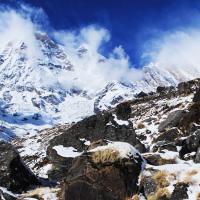
This is the short version of the Annapur
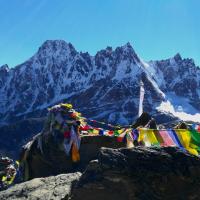
The daunting experience of landing on th
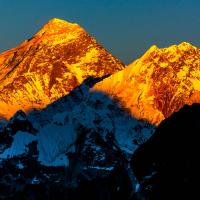
Trekking can be a very addictive adventu
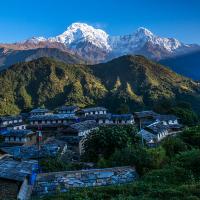
The scenic views of the Himalayas have a
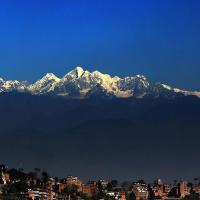
Nepal, famously known as the land of the
The journey starts from the capital stra